
 See Our Latest Article on HelloNation
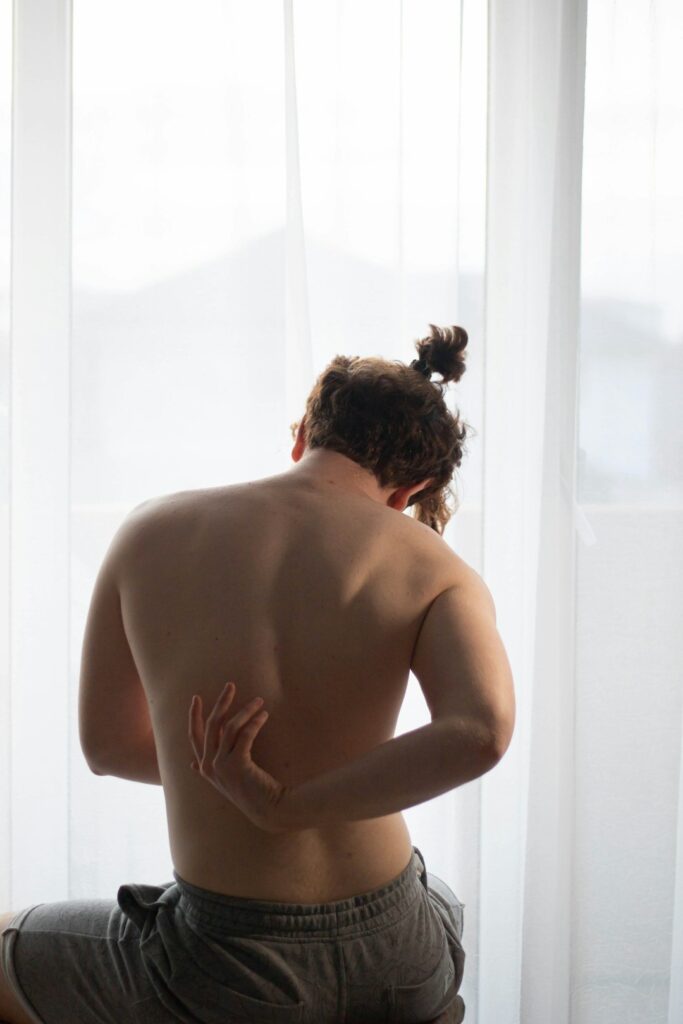
Back pain can make the first movement of the day feel surprisingly difficult. The safest approach is usually to avoid sitting straight up or twisting quickly. Instead, roll onto your side, move your legs toward the edge of the bed, and use your arms to help push your upper body upright.
This method reduces the sudden bending and rotation that can aggravate irritated muscles, joints, or discs. It is useful for many common episodes of low back pain, although severe or unusual symptoms require medical attention.
What is the safest way to get out of bed with back pain?
Use a slow “log-roll” technique that keeps the shoulders, hips, and legs moving together.
1. Bend your knees slightly while lying on your back.
2. Roll onto your side as one unit rather than twisting at the waist.
3. Move both legs toward the edge of the bed.
4. At the same time, use the arm closest to the mattress to help push your upper body up.
5. Pause while sitting on the edge of the bed.
6. Place both feet firmly on the floor before standing.
7. Stand by pushing through your legs, keeping your back in a comfortable, neutral position.
Move slowly enough to notice how your body responds. A brief increase in stiffness can occur after lying still, but sharp, spreading, or electric pain is a reason to stop and reassess.
Why does the first movement in the morning hurt so much?
Pain is often worse after several hours of limited movement because the back and surrounding muscles have become stiff. Sleeping in one position, lying on a mattress that does not support the body well, or spending the previous day lifting, shoveling, gardening, or sitting for long periods can add to morning discomfort.
Cold winter temperatures may also make muscles feel tighter, especially in homes where bedrooms are cooler overnight. That does not necessarily mean the cold caused an injury. It may simply make the transition from rest to movement feel more abrupt.
Before getting up, try a few gentle movements:
- Take several slow breaths and allow the abdominal muscles to relax.
- Bend and straighten one knee at a time if that movement is comfortable.
- Gently rock the knees a small distance from side to side without forcing the motion.
- Circle the ankles or move the feet up and down to prepare for standing.
These movements should be easy and controlled. Stretching aggressively first thing in the morning can make an irritated back feel worse.
Should you sit up straight from the mattress?
Usually, no. A direct sit-up places the lower back into a combination of bending and effort. That motion may strain already sensitive tissues, particularly after a sudden muscle spasm.
Rolling to the side spreads the movement across the shoulders, hips, and legs. Using the arms and legs to assist also reduces the amount of force placed on the lower back. The goal is not to keep the spine perfectly rigid; it is to avoid a sudden, loaded twist.
If the bed is very low, standing may require deeper bending at the hips and knees. If it is unusually high, the feet may not reach the floor safely. A stable bedside surface can provide support, but it should not be used to pull forcefully with one arm.
What should you do after standing?
Take a moment before walking. Stand with the feet about hip-width apart, breathe normally, and notice whether the pain is improving, staying the same, or traveling into the buttock or leg.
For many uncomplicated episodes, gentle activity is preferable to extended bed rest. Walk a short distance around the room, complete basic morning tasks, and change positions regularly. Avoid immediately lifting laundry baskets, snow-removal equipment, children, pet supplies, or heavy objects from the floor.
If bending is necessary, hinge at the hips and bend the knees rather than rounding the lower back. Keep objects close to the body and avoid twisting while carrying them.
Bed rest can feel appealing, but staying still for long periods may increase stiffness and make returning to normal movement more difficult. Brief rest may be reasonable after a painful flare, followed by comfortable, gradual activity.
How can the bed and bedroom setup help?
The sleep environment can affect how difficult it is to rise, particularly for older adults or anyone recovering from an injury.
Helpful adjustments may include:
- Keeping a sturdy chair or stable surface nearby for balance.
- Using a night-light so the first steps are not taken in darkness.
- Removing loose rugs, cords, and clutter from the walking path.
- Keeping frequently used items within easy reach.
- Maintaining a comfortable bedroom temperature during colder months.
- Trying a pillow between the knees when sleeping on the side.
- Placing a pillow under the knees when sleeping on the back if that reduces strain.

A mattress that is too soft may allow the body to sag, while one that is too firm may create pressure points. There is no single mattress type that works for everyone. Comfort, support, and the ability to change positions are more useful measures than a label such as “firm” or “soft.”
When is back pain after waking a warning sign?
Back pain deserves prompt medical evaluation when it is accompanied by symptoms that may signal nerve involvement, infection, fracture, or another condition not suited to home care.
Seek urgent medical help for back pain with:
- New loss of bladder or bowel control.
- Numbness around the inner thighs, groin, or buttocks.
- Significant weakness in one or both legs.
- Difficulty walking, maintaining balance, or standing.
- Severe pain after a fall, crash, or other injury.
- Fever, unexplained weight loss, or feeling seriously ill.
- Pain that is constant, rapidly worsening, or severe at night.
- Pain that travels down the leg, especially below the knee, with numbness or weakness.
A medical evaluation is also appropriate if symptoms are not improving with gentle movement and basic self-care, or if repeated morning pain interferes with work, sleep, household responsibilities, or normal walking.
Can chiropractic care be part of back-pain management?
Chiropractic care is one possible approach for some types of mechanical back pain, particularly when symptoms are related to movement, stiffness, or muscle and joint irritation. A qualified assessment should consider the pain pattern, medical history, medications, recent injuries, nerve symptoms, and other possible causes before any treatment is selected.
Spinal manipulation is not appropriate for every person or every type of back pain. Red-flag symptoms, significant trauma, suspected fracture, infection, progressive weakness, or new bowel and bladder problems require medical evaluation rather than routine conservative care.
For local residents, the most useful first step is often to observe the pattern: whether pain is worse after sleeping, improves with walking, follows a particular activity, or travels into the leg. Those details can help determine whether the problem is likely a short-term strain or something that needs more careful evaluation.
IMAGE_ALT:
Person rolling onto their side and using an arm to rise from bed while managing lower back pain.
